
What happens when school leaders stop asking students to fit existing systems and start asking whether those systems are meeting students’ needs?
That’s the question driving much of the innovative work happening at the Weston campus in Arlington, Washington.
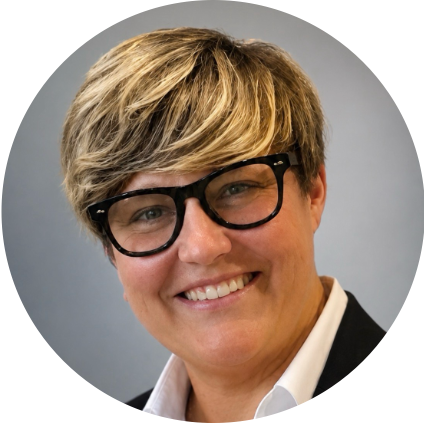
In the latest episode of AWSP’s A Matter of Principals podcast, Deputy Director Jack Arend welcomes Andrea Dixon-Hundredmark, principal of the Weston campus and Director of Student Safety for Arlington Public Schools, for a conversation about school safety, student success, and the importance of turning good ideas into meaningful action.
Throughout the conversation, Andrea challenges school leaders to examine their systems, embrace collaboration, and lead with curiosity.
Meeting Students Where They Are
Weston is more than a traditional high school. The campus serves students through Weston High School, the Open Doors youth reengagement program, and the Arlington Transitions Program for young adults ages 18–22.
It’s a diverse learning environment where traditional approaches don’t always meet the needs of students.
Andrea and her team have embraced that reality.
Rather than expecting every student to navigate the same educational pathway, they’re creating flexible systems that give students opportunities to reengage, build confidence, and experience success.
One example is Weston’s Credit Achievement Period (CAP) approach.
Instead of dividing the school year into two traditional semesters, Weston uses shorter grading periods of approximately 20–25 days. Students who earn passing grades during a period retain that portion of their credit, even if challenges arise later.
For students experiencing instability or significant life circumstances, those shorter periods offer more frequent opportunities to reset, reconnect, and keep moving forward.
It’s one of several creative approaches the Weston team has developed to remove barriers to learning.
The school also provides access to meals outside traditional serving times, incorporates wellness and trauma-informed practices, and uses animal-assisted interventions to support students.
The common thread is simple: schools should be places where students have meaningful opportunities to succeed.
Moving From Good Ideas to Effective Implementation
Andrea’s work extends beyond the Weston campus.
In her additional role as Director of Student Safety, she’s helping Arlington strengthen its approach to behavioral threat assessment through an initiative called ANCHOR.
ANCHOR stands for Assessment, Needs, Collaboration, Help, and Ongoing Review.
Developed in partnership with colleagues at Northwest ESD 189, ANCHOR brings together a multidisciplinary district-level team to support school-based threat assessment teams.
But Andrea is quick to explain that ANCHOR isn’t designed to take responsibility away from building leaders.
Instead, it provides coaching, collaboration, and practical support while helping schools develop the capacity to manage assessments confidently and consistently.
The goal is to strengthen building-level practice, not create permanent dependence on a district-level team.
The distinction matters because Andrea sees an important difference between providing professional development and ensuring that new practices are implemented effectively.
Training alone doesn’t necessarily produce mastery.
School leaders need opportunities to practice, receive feedback, identify gaps, and refine their approaches.
ANCHOR is designed to provide that ongoing support.
Finding the Gaps Is Part of the Work
Perhaps one of the most valuable leadership lessons from Andrea’s experience is the importance of recognizing that implementation is rarely perfect.
As ANCHOR develops, the team continues to discover questions that weren’t fully addressed during initial planning.
How are safety plans communicated to transportation staff who need the information?
What happens when a student transfers between schools?
How can schools ensure that current, relevant information follows a student while maintaining appropriate confidentiality?
These aren’t simply procedural questions. They’re examples of how gaps in systems can affect the people those systems are intended to serve.
For Andrea, identifying a gap isn’t a reason to abandon the work.
It’s an opportunity to improve.
That approach requires trust. Building leaders must feel comfortable raising questions, acknowledging uncertainty, and seeking support without worrying that doing so will be viewed as a failure.
It also requires the humility to recognize that even well-designed systems can be strengthened through experience.
ANCHOR remains a developing initiative, but its emphasis on collaboration, implementation, and continuous improvement offers lessons that extend well beyond school safety.
Relationships Make the Difference
Despite the conversation’s focus on systems and structures, Andrea continually returns to relationships.
At Weston, she sees relationships as the foundation for helping students rewrite their stories.
Students arrive with different experiences, challenges, and expectations. Strong connections with caring adults can help change what they believe is possible.
The same principle applies to adults.
When school leaders create environments where staff members feel supported, trusted, and empowered to solve problems, innovation becomes possible.
And when leaders maintain meaningful connections with students, they’re better positioned to understand what those students actually need.
Data can help identify patterns and challenges, but Andrea reminds us that some of our most valuable insights come directly from students.
Get Curious Before You Get Corrective
Near the end of the episode, Jack asks Andrea to share one piece of advice for other principals and assistant principals.
Her response brings the entire conversation together:
“When you notice something, get curious before you get corrective.”
It’s a simple but powerful reminder.
Before responding to a student’s behavior, questioning a staff member’s decision, or assuming a system is functioning as intended, take time to understand what’s happening.
Ask questions. Listen carefully. Look for context.
Sometimes what we discover challenges our initial assumptions.
And sometimes that curiosity is exactly what leads to better decisions, stronger relationships, and more effective systems.
“
Listen to the Conversation
From rethinking student success at Weston to strengthening behavioral threat assessment practices throughout Arlington, Andrea Dixon-Hundredmark offers a thoughtful perspective on what it means to lead with purpose, curiosity, and a commitment to continuous improvement.
Hear the full conversation with Andrea and AWSP Deputy Director Jack Arend on Episode 52 of A Matter of Principals.
Listen anywhere you get your podcasts.